

Where Does Your Workflow Slow Down? Planning Production Line Improvements Before Next Season
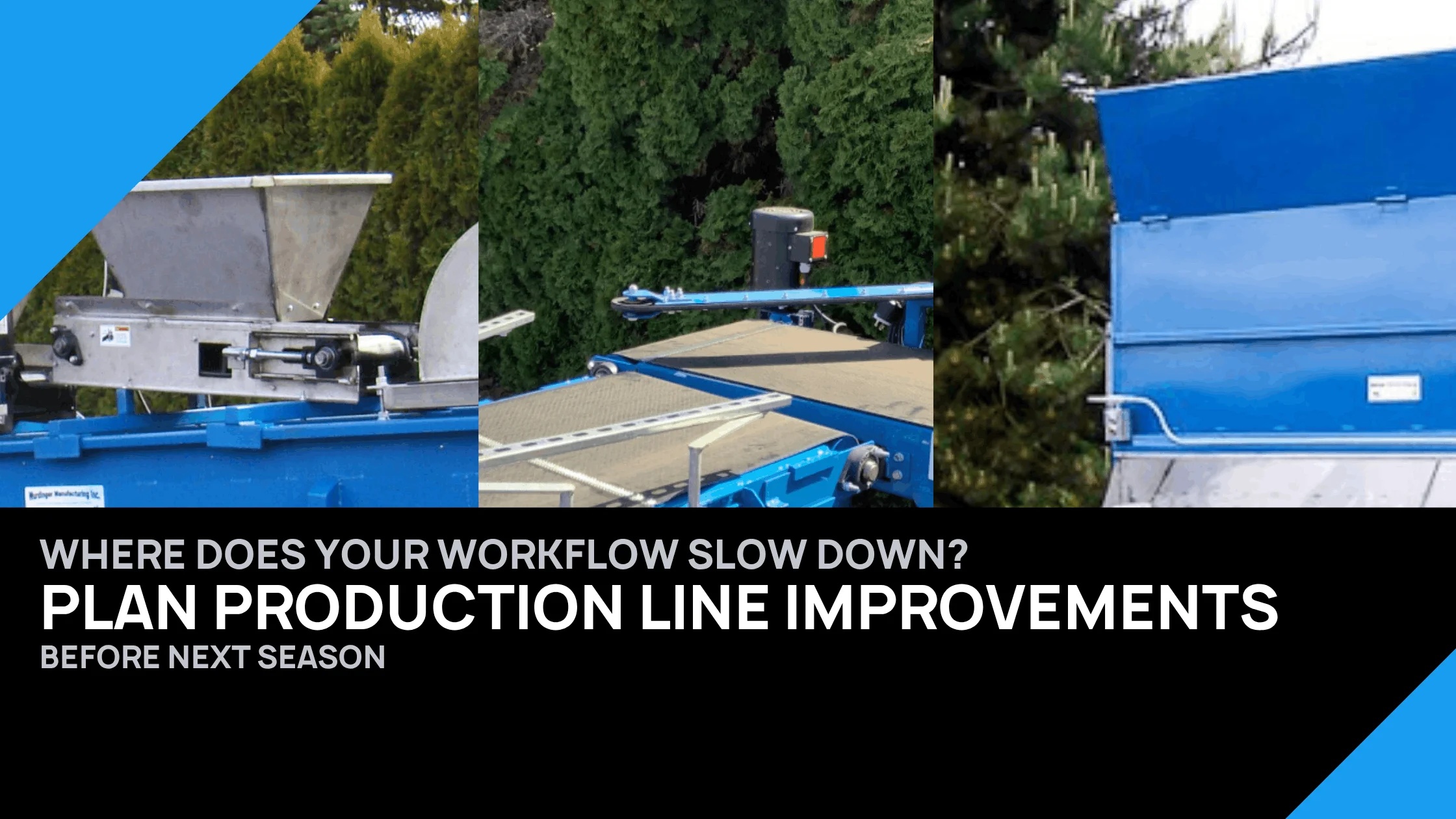
The best time to solve a production bottleneck is usually not in the middle of the busiest day.
It is after the season has shown you what is working, what is slowing down, and what needs a closer look before the next push begins.
For farms, nurseries, and agricultural operations, workflow slowdowns can show up in small ways at first. A crew waits on one step before they can move to the next. Material handling takes longer than expected. Potting becomes the point where everything backs up. Equipment needs more attention than it should. A part fails at the wrong time. A repair interrupts production.
One slowdown may not seem like a major issue. But when the same problem repeats, it can affect labor, timing, output, and the way the whole operation runs.
That is where production line planning becomes important.
Wurdinger Manufacturing helps agricultural and nursery customers think beyond a single machine or one repair. The stronger question is often:
Where is the workflow actually slowing down, and what would help the full operation move better?
Start with the Bottleneck
A production bottleneck is the point in the process where work starts to back up.
In some operations, the bottleneck is obvious. Equipment goes down, a conveyor is not moving material quickly enough, or one step in the process cannot keep up with the rest.
In other operations, the bottleneck is harder to see because the crew has worked around it for so long.
Common signs of a workflow bottleneck include:
- Crew members waiting on equipment, materials, or the next step
- Potting, loading, sorting, or material handling taking longer than expected
- Too much manual handling between steps
- Equipment that works, but does not match the current volume or workflow
- Repairs or adjustments that interrupt production repeatedly
- Parts or hydraulic issues that slow equipment down
- A process that depends too heavily on one person, one machine, or one workaround
- Production plans that are difficult to scale because the current setup is already stretched
When a slowdown keeps showing up in the same place, it is worth looking at the whole process instead of only fixing the immediate issue.
Look at How People, Equipment, and Materials Move Together
Better production flow is not just about buying a bigger machine.
It is about how people, equipment, materials, space, and timing work together.
For a nursery, that may include potting workflow, soil handling, conveyors, container movement, spacing, labor needs, and how material moves from one point to the next.
For agricultural operations, it may include equipment layout, loading and unloading, repair access, parts availability, seasonal timing, and how different machines or systems support the work.
Before making equipment decisions, it helps to ask:
- Where does the work slow down most often?
- Is the issue labor, equipment, layout, material handling, maintenance, or timing?
- Are crews doing extra manual work that equipment could support?
- Is one machine limiting the pace of the rest of the operation?
- Are parts or service issues interrupting production?
- Is the current setup built for the operation you have now, or the one you used to have?
- What needs to be easier before the next busy season?
These questions can help clarify whether the next step is a part, a service visit, a repair, an upgrade, or a larger production line conversation.
When a Single Piece of Equipment May Be Enough
Sometimes a full system is not needed.
A customer may only need one piece of equipment, one replacement component, one repair, or one adjustment to remove a point of friction.
For example, a single equipment addition or upgrade may help when:
- One step in the process is clearly slowing everything else down
- A specific machine is no longer keeping up
- A conveyor, part, or component could improve flow
- A repair or modification would make the current setup more useful
- The operation is not ready for a full system change, but needs one practical improvement now
In these cases, Wurdinger can help customers think through the specific need and determine whether a targeted solution makes sense.
That may include equipment support, custom components, hydraulic parts, service, repair, or help identifying what is causing the slowdown.
When It May Be Time to Think About a Larger Production Line System
Other times, the issue is bigger than one machine.
A slowdown may be part of a larger pattern in how the operation is organized. The equipment may work individually, but the process around it may not flow well. Material may be moving too many times. Crews may be spending too much time handling steps that could be supported more efficiently. One area may improve, only to reveal another bottleneck right behind it.
That is when it may be time to talk about a production line system.
A production line system can help customers look at the full workflow, including how equipment connects, how materials move, and how the process can better support the team doing the work.
For nursery operations, that may include:
- Inline potting
- Soil handling
- Conveyors
- Container movement
- Production flow
- Equipment layout
- Labor support
- Long-term service and maintenance needs
For agricultural operations, that may include:
- Equipment planning
- Material handling
- Production support
- Custom equipment solutions
- Parts and service needs
- Repair access
- Future upgrades or modifications
The point is not to add complexity.
The point is to make the work move better.
Why Fall Is a Good Time to Plan
Fall is a natural time to look back at the season and identify what needs attention before the next production cycle.
By the time the busy season is underway, decisions often become urgent. Customers may be reacting to equipment problems, searching for parts, trying to schedule repairs, or working around workflow issues that could have been addressed earlier.
Planning ahead creates more options.
Fall planning gives customers time to:
- Review what slowed down during the season
- Identify repeated equipment or production issues
- Plan service or maintenance before problems become urgent
- Check hydraulic hoses, fittings, and replacement components
- Think through parts needs
- Consider equipment upgrades
- Talk through production line improvements
- Schedule conversations before the next busy season
A small issue in the fall can become a bigger problem later if it is ignored. A workflow problem that was frustrating this year may become more expensive next year if volume increases or labor becomes harder to manage.
Taking time to review the process now can make the next season stronger.
Planning Ahead Can Also Support Larger Equipment Decisions
For customers considering a larger equipment purchase or production line improvement, fall can also be a useful time to look at timing.
Some businesses use the end of the year to review equipment needs, future production goals, available budget, and potential tax planning opportunities with their accountant or tax professional. Wurdinger Manufacturing does not provide tax advice, but customers who are already considering a larger investment may want to ask their tax advisor whether timing matters for their operation.
Financing options may also be available for qualifying purchases, which can help customers move forward with larger equipment projects, production line improvements, or needed upgrades while planning around cash flow and seasonality.
For customers who know they need to improve production flow before the next busy season, starting the conversation earlier can make it easier to review options, ask questions, think through financing, and make a more informed decision.
How Parts, Hydraulics, and Service Support the Full System
Production flow does not depend only on the equipment that was originally installed.
It also depends on keeping that equipment running.
That is why Wurdinger’s support includes more than manufacturing. The Ag Supply Store, hydraulic support, mobile service, maintenance, in-shop repair, and long-term equipment support all matter.
A customer may start with a production line conversation and discover that a service issue needs attention first. Another customer may come in for hydraulic parts and realize the same failure keeps happening because of a larger equipment problem. Another may need mobile service before deciding whether a system upgrade is the right next step.
Parts, service, and production systems are connected.
The right support may include:
- Hydraulic hoses and fittings
- Replacement components
- Spray parts
- Filters and seals
- Mobile service
- In-shop repair
- Maintenance support
- Equipment upgrades
- Production line planning
- Custom equipment conversations
- Financing options for qualifying purchases
When these pieces work together, customers get more than a one-time fix. They get a clearer path toward keeping the operation moving.
Do Not Wait Until the Same Problem Comes Back
If the same slowdown happened more than once this season, it is worth paying attention to.
Maybe potting slowed the line. Maybe material handling took too much time. Maybe equipment needed repeated attention. Maybe hydraulic issues interrupted production. Maybe the crew worked around a problem because there was not time to stop and solve it.
Those patterns matter.
A repeated slowdown is often a sign that something in the process needs to be reviewed before the next season.
The solution may be simple. It may be a part, a service visit, a repair, or a small equipment adjustment.
Or it may be time to talk about a larger production line system.
Either way, the first step is understanding where the workflow slows down and what support would make the operation more reliable.
Talk Through the Next Step with Wurdinger Manufacturing
Wurdinger Manufacturing helps farms, nurseries, and agricultural operations think through equipment, parts, service, and production line needs.
Whether the next step is a replacement part, hydraulic support, mobile service, in-shop repair, equipment modification, financing options for a qualifying purchase, or a larger production system conversation, the goal is the same:
Keep your operation moving.
If your team lost time this season to workflow slowdowns, equipment issues, material handling, maintenance needs, or production bottlenecks, now is a good time to start the conversation.
Contact the Wurdinger Manufacturing Sales Team in Silverton to talk through your operation, where things are slowing down, and what may help before the next season begins.
Email: info@wurdingermanufacturing.com
Phone: 503-873-9872