

How Agricultural Equipment Is Designed for Real-World Farming
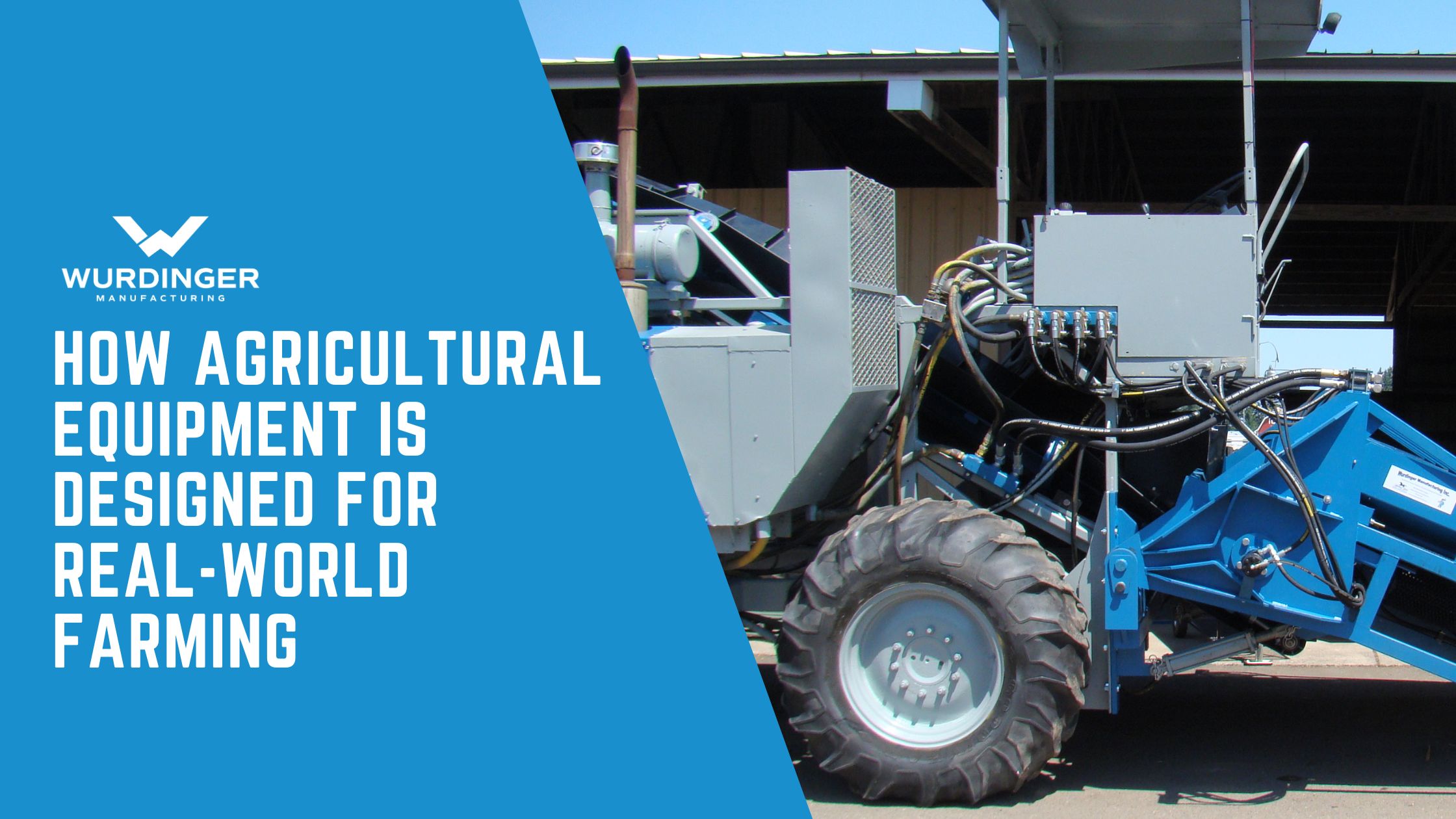
Effective agricultural equipment design goes far beyond appearance or basic functionality. For commercial agricultural operations, equipment must perform reliably under real-world conditions—long hours, heavy workloads, varying terrain, and demanding environments.
At Wurdinger Manufacturing, we design and build equipment with real-world farming in mind. Our approach to agricultural equipment design is shaped by hands-on experience, engineering expertise, and continuous feedback from growers who depend on their equipment every day.
In this article, we’ll explain how agricultural equipment is designed for real-world farming, the role of engineering and durability, and why manufacturing location and testing matter.
Why Agricultural Equipment Design Matters
Good agricultural equipment design directly impacts productivity, safety, and long-term operating costs. Poorly designed equipment may work in theory but fail under real farming conditions.
Effective design focuses on:
- Durability for continuous commercial use
- Ease of operation and maintenance
- Performance consistency across changing conditions
For commercial operations, design quality determines whether equipment becomes an asset—or a liability.
Farm Equipment Engineering Built for Commercial Use
Strong farm equipment engineering starts with understanding how equipment will actually be used. Commercial agriculture places unique demands on machinery, including repetitive tasks, heavy loads, and exposure to weather and debris.
Key engineering considerations include:
- Structural strength and load capacity
- Precision in moving parts
- Stress points and wear areas
At Wurdinger Manufacturing, our engineering process prioritizes equipment that can withstand daily commercial use without sacrificing performance.
Designing Heavy-Duty Farm Machinery
Heavy-duty farm machinery must be built to operate reliably in demanding environments. This requires careful selection of materials, component sizing, and reinforcement where it matters most.
Design elements that support durability include:
- Reinforced frames and welded structures
- High-quality bearings and drive components
- Designs that minimize vibration and fatigue
These design choices help extend equipment lifespan and reduce unexpected downtime.
Equipment Durability and Long-Term Performance
Equipment durability is not accidental—it is the result of intentional design and testing. Durable agricultural equipment reduces:
- Repair frequency
- Replacement costs
- Production interruptions
By designing equipment with longevity in mind, manufacturers help agricultural operations achieve better long-term ROI.
Built and Tested for Oregon Conditions
As an Oregon-based manufacturer, we design equipment that performs in real agricultural environments. From wet conditions to uneven terrain, equipment must be tested beyond controlled settings.
Designing and testing in Oregon conditions allows us to:
- Validate equipment performance in varied weather
- Identify design improvements early
- Build machinery that performs consistently across regions
This real-world testing helps ensure equipment reliability for growers nationwide.
Our Approach to Agricultural Equipment Design
At Wurdinger Manufacturing, agricultural equipment design is driven by function, durability, and usability. We work closely with customers to understand how equipment fits into their workflows before finalizing designs.
Our approach emphasizes:
- Purpose-built engineering
- Practical, serviceable designs
- Equipment built for commercial-scale agriculture
You can learn more about our manufacturing philosophy and design process on our About / Manufacturing page:
👉 https://wurdingermanufacturing.com/about/
You can also explore our full range of equipment solutions on our homepage:
👉 https://wurdingermanufacturing.com/
Designing Equipment for the Real World
Agricultural equipment design plays a critical role in long-term success for commercial farming operations. Equipment engineered for real-world conditions delivers better reliability, durability, and performance where it matters most.
At Wurdinger Manufacturing, we remain focused on designing and building equipment that supports real-world farming—today and into the future.
Frequently Asked Questions
What is agricultural equipment design?
Agricultural equipment design is the process of engineering machinery used in farming, focusing on durability, efficiency, safety, and real-world usability.
Why is farm equipment engineering important?
Farm equipment engineering ensures machinery can withstand commercial workloads, operate efficiently, and perform consistently under demanding conditions.
What makes heavy-duty farm machinery different?
Heavy-duty farm machinery is designed with reinforced structures, durable components, and engineering that supports continuous commercial use.
How does equipment durability affect ROI?
Durable equipment reduces maintenance costs, minimizes downtime, and extends lifespan—leading to stronger long-term return on investment.
How does Wurdinger Manufacturing design equipment for real-world farming?
We design equipment based on real agricultural workflows, test it under real conditions, and refine designs to support durability and long-term performance.