

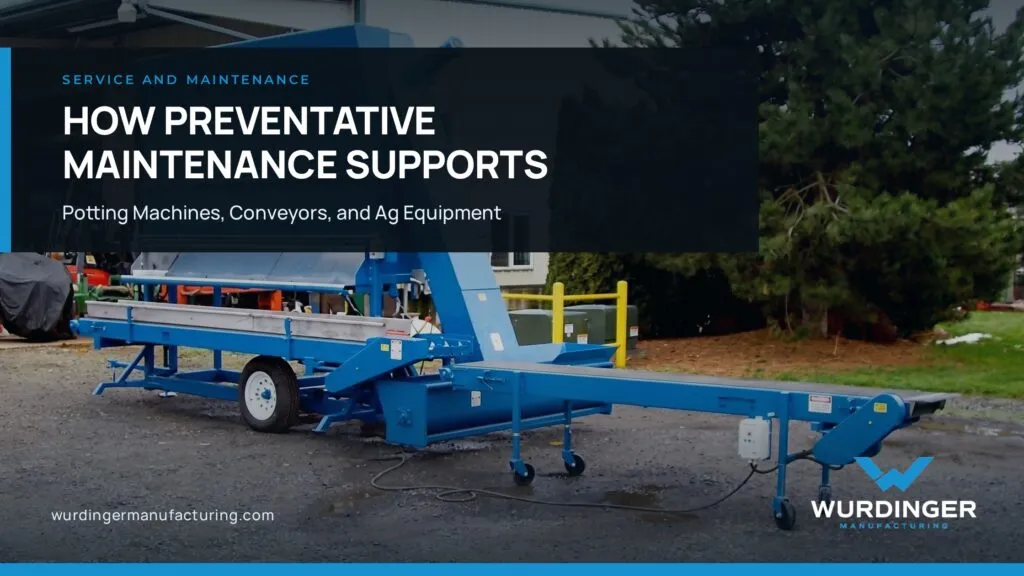
How Preventative Maintenance Supports Potting Machines, Conveyors, and Ag Equipment
Preventative maintenance is often easier to postpone than a repair.
When equipment is still running, it can be tempting to keep production moving and deal with wear later. The problem is that many breakdowns begin with small issues that are easy to miss during a busy shift.
A loose chain becomes a damaged sprocket. A worn bearing begins affecting alignment. A leaking hydraulic fitting turns into a failed hose. A conveyor that needs frequent adjustment eventually stops production altogether.
Preventative maintenance gives farms and nurseries time to find those problems before they become urgent.
For potting machines, conveyors, and agricultural equipment, regular inspections can help protect production time, reduce emergency repairs, and make it easier to plan parts and service needs.
Preventative Maintenance Is More Than Lubrication
Lubrication is important, but a useful maintenance plan goes further.
It may include:
- Cleaning equipment thoroughly
- Inspecting moving parts
- Checking belts, chains, bearings, and sprockets
- Reviewing hydraulic hoses and fittings
- Testing controls and sensors
- Checking alignment and tension
- Looking for leaks, corrosion, or damaged wiring
- Tightening loose fasteners
- Inspecting guards and safety systems
- Replacing worn parts before they fail
- Documenting recurring problems
The goal is not to complete every possible repair during one inspection.
The goal is to understand the current condition of the equipment and decide what needs attention now, what should be scheduled, and what should be watched.
Potting Machines Depend on Consistent Material Flow
Potting machines often handle soil, containers, and plant material for long periods. These materials can be abrasive, dusty, and difficult on moving components.
A maintenance review should look closely at:
- Hoppers
- Soil elevators
- Augers
- Belts
- Chains
- Bearings
- Filling components
- Pot dispensers
- Sensors
- Controls
- Guards
- Hydraulic components
Material buildup can hide wear and interfere with normal movement. Soil may collect around bearings, sensors, rollers, or adjustment points. Gates and dispensing components may also wear unevenly over time.
Cleaning the machine before inspection makes it easier to see cracks, leaks, loose hardware, damaged surfaces, and areas where materials are rubbing.
Watch for Changes in Potting Performance
Equipment does not always fail suddenly. It may begin showing small changes in performance first.
Common warning signs include:
- Uneven pot filling
- Inconsistent soil flow
- Pots tipping or feeding incorrectly
- Frequent jams
- More material spilling around the machine
- Controls that respond slowly
- Increased vibration
- Unusual noise
- Longer setup or adjustment time
- Lower output than usual
These changes may point to a worn component, alignment issue, material buildup, sensor problem, or hydraulic concern.
Addressing the cause early can help prevent damage to other parts of the machine.
Conveyors Affect the Entire Production Line
A conveyor may appear simple, but it often connects several important production steps.
When a conveyor slows down or stops, the equipment before it may have nowhere to send finished products. Employees may need to move pots or materials by hand. Products may begin stacking up between workstations.
Conveyor maintenance should include:
- Belt tracking
- Belt tension
- Roller condition
- Bearings
- Drive motors
- Chains and sprockets
- Supports and frames
- Guides
- Sensors
- Controls
- Emergency stops
- Transfer points
Pay close attention to areas where products regularly tip, catch, or pile up. The issue may be related to speed, alignment, worn rollers, damaged guides, or the transition between two pieces of equipment.
Small Alignment Problems Can Create Larger Repairs
A belt or chain that is slightly out of alignment may continue running for some time.
During that time, it may create uneven wear on rollers, bearings, sprockets, guides, or the frame.
Repeated belt tracking adjustments are often a sign that the root cause has not been corrected.
Possible causes include:
- Worn bearings
- Bent supports
- Loose hardware
- Uneven tension
- Damaged rollers
- Improper loading
- Misaligned drive components
Correcting the underlying issue can reduce wear and make the conveyor more reliable.
Hydraulic Components Need Regular Attention
Hydraulic systems are used throughout potting equipment, conveyors, lifts, trailers, and agricultural machinery.
A small hydraulic leak can develop into a larger repair if it is ignored.
Inspect:
- Hoses
- Fittings
- Cylinders
- Seals
- Valves
- Filters
- Fluid levels
- Areas where hoses rub against the frame
Look for cracking, abrasion, exposed reinforcement, loose fittings, leaking seals, damaged protective covering, and unusual cylinder movement.
Never use your hands to check for a pressurized hydraulic leak. Hydraulic fluid under pressure can cause serious injury.
Worn hoses and fittings should be addressed before the equipment returns to heavy use.
Agricultural Equipment Faces Different Types of Wear
Field and agricultural equipment may be exposed to dust, mud, moisture, vibration, heavy loads, and changing weather.
Maintenance needs vary by machine, but common inspection areas include:
- Frames and welds
- Tires and wheels
- Hitches
- Bearings
- Drivelines
- Chains
- Belts
- Hydraulic systems
- Electrical connections
- Guards
- Cutting or working components
- Adjustment points
Equipment used for harvest, processing, or material handling should also be checked along the full path the crop or material travels.
Look for damaged surfaces, worn screens, loose supports, poor transitions, and places where material is being lost or damaged.
Controls and Sensors Can Cause Intermittent Problems
Electrical and control issues may not stop equipment completely.
They may appear as:
- Random shutdowns
- Unreliable sensors
- Inconsistent conveyor speeds
- Delayed responses
- Controls that need repeated resets
- Equipment that works differently from one shift to the next
These problems are easier to troubleshoot when operators document when they happen and what the equipment was doing at the time.
Inspect visible wiring, switches, connectors, control panels, and sensors for looseness, moisture, heat damage, corrosion, or wear.
Electrical testing and repairs should be handled by qualified personnel.
Maintenance Records Help Identify Patterns
A single repair may not reveal much.
A record of repeated repairs can show where a larger problem exists.
Track:
- Date of service
- Equipment hours
- Parts replaced
- Symptoms reported
- Adjustments made
- Downtime
- Who completed the work
- Recommended follow-up
- Recurring failures
If the same bearing, hose, belt, or sensor continues failing, replacing the part may not be enough.
The equipment may have an alignment issue, an operating problem, a layout concern, or a component that is being used beyond its original capacity.
Maintenance records make those patterns easier to see.
Ask the Operators What They Have Noticed
The people who run the equipment every day often notice changes before a breakdown occurs.
Ask them:
- What needs frequent adjustment?
- Which machine sounds different?
- Where do products regularly jam?
- Which controls are unreliable?
- What is becoming harder to clean?
- Where is material spilling?
- What temporary fixes are still in place?
- Which equipment feels less stable or consistent?
Their answers can help the maintenance team focus on issues that may not be obvious during a stationary inspection.
Plan Common Replacement Parts in Advance
Preventative maintenance is also a good time to review spare parts.
A practical inventory may include:
- Bearings
- Belts
- Chains
- Sprockets
- Hydraulic hoses
- Fittings
- Filters
- Seals
- Sensors
- Switches
- Fasteners
- Lubricants
- Equipment-specific wear parts
You do not need to stock every possible component.
Focus on parts that wear regularly, take longer to order, or would stop the entire production process if they failed.
Label parts clearly and store them where the team can find them quickly.
Schedule Work Before Equipment Is Needed Every Day
The best time to complete maintenance is before the next busy season.
A scheduled inspection gives the team time to:
- Order parts
- Plan repairs
- Coordinate outside service
- Prepare the work area
- Make equipment changes
- Test the machine after the work is complete
- Train operators on any new procedures
Waiting until production depends on the equipment every day leaves fewer options.
Preventative Maintenance Can Reveal Larger Workflow Problems
Not every issue is a maintenance problem.
An equipment inspection may reveal that a machine is being asked to handle more volume than it was designed for. A conveyor may be too narrow, too slow, or poorly positioned for the current workflow. A potting machine may no longer support the range of container sizes the nursery is producing.
In those cases, the next step may involve:
- Repositioning equipment
- Adding a conveyor
- Changing a transfer point
- Updating controls
- Modifying a machine
- Replacing one limiting component
- Planning a larger production line upgrade
Maintenance can help separate a worn part from a system that no longer fits the operation.
Protect Production Time Before the Next Season
Preventative maintenance does not eliminate every breakdown.
It does make it easier to find wear, plan repairs, organize parts, and address recurring issues before they interrupt production.
For farms and nurseries, that can mean fewer emergency calls, less unplanned downtime, and more confidence when the next busy season begins.
Wurdinger Manufacturing supports agricultural and nursery operations with preventative maintenance, equipment troubleshooting, hydraulic support, replacement parts, mobile service, in-shop repair, and production system planning.
Need help preparing your potting machines, conveyors, or agricultural equipment for the next season? Contact Wurdinger Manufacturing to discuss inspections, service, parts, repairs, or equipment improvements.