

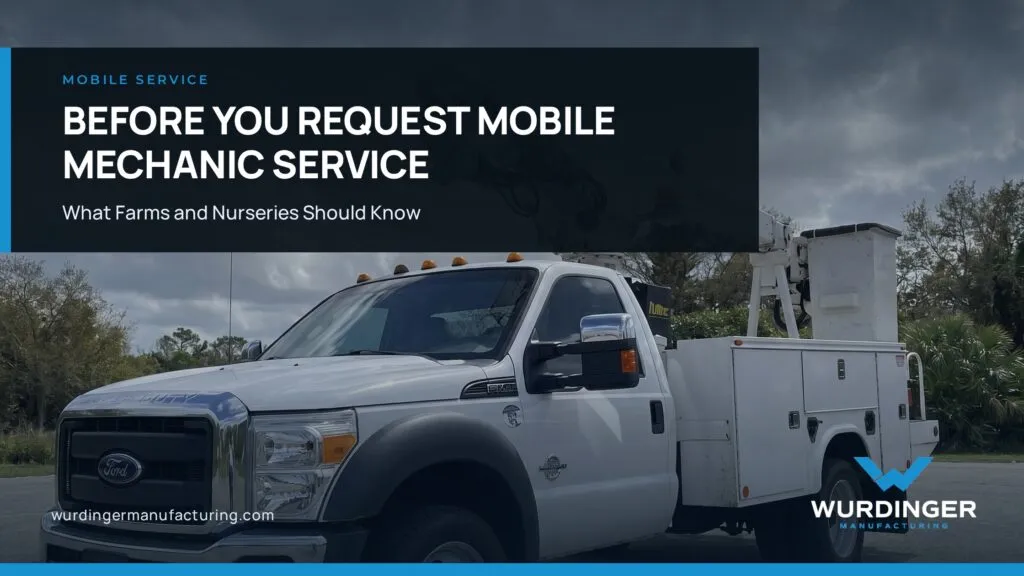
What Farms and Nurseries Should Know Before Requesting Mobile Mechanic Service
When farm or nursery equipment stops working, bringing the machine to a repair shop is not always practical.
The equipment may be too large to move easily. It may be installed as part of a production line. Transporting it may require a trailer, additional labor, or more downtime than the repair itself.
Mobile mechanic service can allow a technician to inspect, troubleshoot, maintain, or repair equipment at your farm, nursery, or production facility.
The right preparation can help the service team understand the problem, arrive with more useful information, and determine whether mobile service is the best next step.
Mobile Service Is Not the Right Fit for Every Repair
Some equipment problems can be diagnosed or repaired at the customer’s location. Others require the tools, workspace, lifting equipment, testing capabilities, or parts access available in a repair shop.
Mobile service may be a good option when:
- The equipment is difficult to transport
- The machine is installed as part of a larger production system
- The problem can be inspected safely at the jobsite
- The equipment needs routine maintenance
- A hydraulic hose, fitting, cylinder, or related component needs attention
- The operation needs help identifying the source of a mechanical problem
- Moving the equipment would create additional cost or downtime
In-shop service may make more sense when:
- The equipment needs extensive disassembly
- A major component must be rebuilt
- The repair requires specialized shop equipment
- The machine cannot be accessed safely
- The repair will take more time than can reasonably be completed on-site
- Weather or working conditions make an outdoor repair unsafe
- The equipment needs repeated testing that is easier to complete in the shop
The service team may be able to recommend the best option after reviewing the equipment details, photos, symptoms, and location.
Start With the Equipment Information
Before requesting service, gather as much identifying information as possible.
Useful details include:
- Equipment type
- Manufacturer
- Model
- Serial number
- Approximate year
- Engine or motor information
- Any part numbers that are visible
- Whether the equipment was purchased from Wurdinger
- Whether it is part of a larger production system
A photo of the equipment identification plate can be helpful. Make sure the numbers are clear and readable.
If the machine has been modified, rebuilt, or connected to other equipment, mention that as well. The current setup may be different from the original manufacturer’s specifications.
Describe What the Equipment Is Doing
The phrase it is not working may not give the technician enough information to prepare.
Describe the problem as clearly as you can.
For example:
- The conveyor motor runs, but the belt does not move
- A hydraulic cylinder extends but will not retract
- The equipment shuts down after operating for 20 minutes
- A hose leaks when the system is under pressure
- The potting machine is filling containers unevenly
- The machine makes a grinding noise during startup
- The controls need to be reset several times per shift
- The equipment moves more slowly than it did previously
Explain when the problem started and whether it happened suddenly or developed over time.
It is also helpful to note:
- Any unusual noises
- Leaks
- Smoke or burning smells
- Warning lights
- Changes in speed
- Changes in pressure
- Increased vibration
- Intermittent shutdowns
- Recent repairs
- Parts that were recently replaced
These details can help the technician narrow down the possible causes before arriving.
Send Photos and Video When Possible
Photos and short videos can provide information that is difficult to explain over the phone.
Useful photos may include:
- The entire machine
- The damaged or leaking area
- The identification plate
- The control panel
- Hydraulic hoses and fittings
- Electrical connections
- The area around the equipment
- How the machine connects to the rest of the production line
Take both close-up and wider photos.
A close-up may show a damaged fitting, while a wider image shows where the fitting is located and whether the technician can reach it safely.
A short video can also show:
- The sound the equipment is making
- How a belt or chain is moving
- When the machine stops
- Whether a cylinder is moving unevenly
- What happens when a control is activated
Do not operate unsafe equipment simply to record a video. If the machine is leaking heavily, sparking, smoking, unstable, or creating another hazard, shut it down and wait for qualified assistance.
Explain How Urgent the Repair Is
Not every equipment problem has the same impact on the operation.
Tell the service team whether:
- Production has stopped completely
- The equipment is still running at reduced capacity
- A temporary backup is available
- The machine is needed for a scheduled production run
- Weather is affecting the timeline
- The problem involves a safety concern
- The repair can be scheduled during planned downtime
This does not guarantee immediate service, but it helps the team understand the situation and prioritize the request appropriately.
Be clear about any hard deadlines. For example, explain if the equipment must be running before a delivery, harvest window, production shift, or customer order.
Identify the Equipment Location
Provide the exact service location, not only the farm or business name.
Include:
- Street address
- Gate or driveway instructions
- Building or field location
- Contact person on-site
- Best phone number
- Parking instructions
- Access limitations
- Whether the technician will need to check in at an office
- Whether the location is difficult to find through GPS
Large properties can have several buildings, fields, or production areas. Clear instructions can prevent delays after the technician arrives.
If the equipment is located in a muddy field, narrow greenhouse, crowded shop, or secured area, mention that in advance.
Make Sure the Equipment Is Accessible
The technician needs enough room to inspect and work around the machine safely.
Before the appointment:
- Remove unnecessary materials from the work area
- Move carts, pallets, and stored products out of the way
- Provide access to all sides of the equipment when possible
- Make sure gates and doors can accommodate the service vehicle
- Identify overhead clearance limitations
- Secure animals and restrict customer access
- Provide adequate lighting if the equipment is indoors
- Let the technician know about uneven ground or other hazards
If the machine is part of a production line, the surrounding equipment may also need to be shut down or moved.
Do not disassemble the machine unless the service team asks you to. Removing parts without documenting their original position can make troubleshooting more difficult.
Follow Proper Shutdown Procedures
Equipment should be shut down and secured before service begins.
Follow the manufacturer’s procedures for:
- Lockout and tagout
- Disconnecting power
- Releasing stored hydraulic or pneumatic pressure
- Lowering raised components
- Blocking moving parts
- Securing attachments
- Allowing hot components to cool
Make sure employees know that the machine is being serviced and should not be restarted.
If the problem involves electrical, hydraulic, mechanical, or structural hazards, leave the equipment off until it has been evaluated.
Never use your hands to search for a pressurized hydraulic leak. Hydraulic fluid under pressure can penetrate the skin and cause serious injury.
Share Previous Repair and Maintenance Information
A recurring problem may be easier to diagnose when the technician knows what has already been done.
Provide any available information about:
- Previous service visits
- Parts that were replaced
- Temporary repairs
- Hydraulic fluid or filter changes
- Recent electrical work
- Adjustments made by operators
- Modifications to the equipment
- Problems that happen repeatedly
- Manufacturer service recommendations
Maintenance records, repair invoices, equipment manuals, and wiring or hydraulic diagrams may also be useful.
If an employee has been managing the issue with a temporary fix, explain exactly what they have been doing.
Have the Right Person Available
Someone who understands the equipment should be available when the technician arrives.
That person should be able to explain:
- How the machine normally operates
- What changed
- When the problem occurs
- Which temporary fixes have been tried
- How the equipment fits into the larger workflow
- Whether the issue affects other machines
The employee who operates the equipment every day may know more about the symptoms than the person who scheduled the appointment.
When possible, have that operator available for at least the beginning of the service visit.
Expect That Diagnosis May Be the First Step
A mobile service visit does not always result in a complete repair during the first appointment.
The technician may need to:
- Identify the failed component
- Confirm the source of a leak
- Test the electrical or hydraulic system
- Determine whether additional damage is present
- Locate replacement parts
- Recommend that the machine be moved to the shop
- Coordinate a second visit
- Discuss a larger equipment or workflow problem
Some issues are straightforward. Others require more testing, parts, or planning.
A clear diagnosis is still valuable. It helps prevent unnecessary parts replacement and gives the operation a better understanding of the next step.
Ask About Parts Before the Appointment
If the failed part has already been identified, provide the part number and photos when scheduling.
The service team may ask you to bring or send:
- The original hose
- Fitting measurements
- Filter numbers
- Bearing numbers
- Belt dimensions
- Equipment manuals
- Manufacturer diagrams
- Photos of the damaged component
Wurdinger’s Ag Supply Store may be able to help with hydraulic hoses, fittings, replacement parts, filters, seals, and related agricultural supplies.
Having the correct part available can shorten the repair process, but parts availability will depend on the equipment and component needed.
Mobile Service Can Also Support Preventative Maintenance
You do not need to wait for a complete breakdown to request equipment service.
Mobile service may also be useful for scheduled inspections and maintenance.
Depending on the equipment and service needs, this may include reviewing:
- Hydraulic hoses and fittings
- Bearings
- Belts
- Chains
- Sprockets
- Conveyor tracking
- Motors
- Sensors
- Controls
- Guards
- Fluid and filter condition
- Visible structural wear
Scheduled service gives the operation more flexibility to order parts, plan repairs, and complete work before the equipment is needed every day.
A Repair May Reveal a Larger Workflow Issue
Sometimes the failed component is not the full problem.
A conveyor belt may keep moving out of alignment because the frame is damaged. A hydraulic hose may fail repeatedly because it is routed against a sharp surface. A motor may be overloaded because the equipment is handling more volume than it was designed for.
Repeated repairs may point to:
- Equipment misalignment
- Poor material flow
- Excessive production demands
- Inadequate maintenance access
- A machine that no longer fits the current process
- A layout that creates unnecessary strain on equipment
- The need for an equipment modification or production line upgrade
The immediate repair may get production moving again. A larger review may help prevent the same problem from returning.
Information to Have Ready Before You Call
Before requesting mobile mechanic service, gather:
- Your name and business
- Equipment location
- Make and model
- Serial number
- Description of the problem
- When the problem started
- Photos and video
- Recent repair history
- Current operating status
- Safety concerns
- Level of urgency
- Access instructions
- Best on-site contact
- Any known part numbers
The more complete the information, the easier it is for the service team to evaluate the request and determine the right next step.
Requesting Mobile Mechanic Service From Wurdinger
Wurdinger Manufacturing supports farms, nurseries, and agricultural operations with mobile service, equipment troubleshooting, hydraulic support, replacement parts, preventative maintenance, and in-shop repair.
Mobile service availability and the type of work that can be completed on-site depend on the equipment, location, safety conditions, technician availability, and repair required.
Need help with farm, nursery, or production equipment? Contact Wurdinger Manufacturing with the equipment information, location, symptoms, photos, and urgency so the service team can help determine whether mobile service or in-shop repair is the right next step.